Home › Commercial Concrete Slabs and Flatwork
Superior Concrete Cincinnati pours commercial concrete slabs and flatwork for warehouses, retail spaces, and industrial sites throughout Cincinnati, OH. We deliver level, durable surfaces that hold up to heavy loads and constant traffic. From interior floors to exterior loading areas, our flatwork meets demanding commercial standards.
Superior Concrete Cincinnati provides professional commercial concrete slab throughout Cincinnati, OH, Ohio and the surrounding area. Our licensed, insured crew delivers safe, clean, on-time work with a free estimate before anything begins. Call (513) 993-5657 or request your free quote.
Commercial Concrete Slabs for Cincinnati Businesses
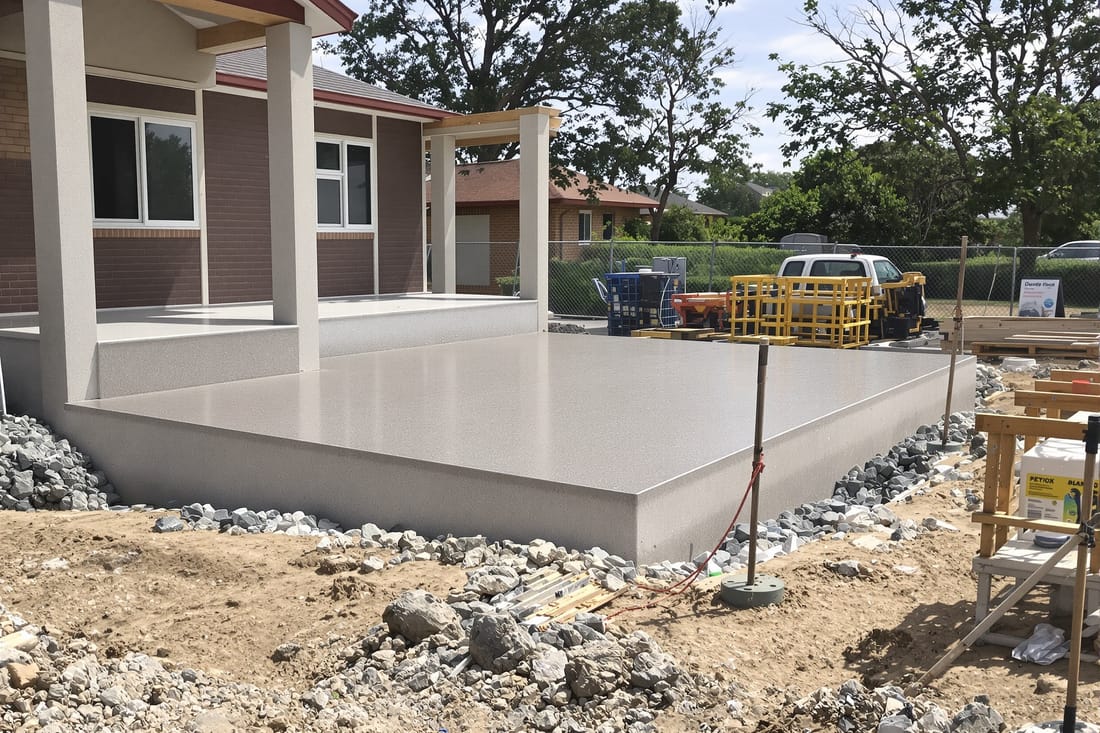
Superior Concrete Cincinnati installs commercial concrete slabs and flatwork for projects across the Greater Cincinnati area, from small retail pads in Norwood to large warehouse floors near the riverfront. Our focus is on building slabs that stay flat, carry the intended load, and hold up to freeze-thaw cycles and deicing salts common in Ohio.
We handle new construction slabs, additions, equipment pads, loading and dumpster pads, and slab replacements inside existing buildings. On each project, we match slab thickness, reinforcement, and joint layout to the use of the space, whether that is foot traffic, pallet jacks, forklifts, racking, or heavy machinery.
Because commercial concrete slabs are a major part of your structure, we coordinate with your architect, engineer, or GC to make sure subgrade prep, elevations, and penetrations line up with the rest of the build. If you do not have an engineer, we can work within local code requirements and typical industry standards for light commercial work in Cincinnati and the surrounding townships.
How We Install Commercial Concrete Slabs and Flatwork
A dependable commercial concrete slab in Cincinnati starts with subgrade evaluation. We look at existing soils, past fill, and any signs of settlement or moisture. In many older industrial areas here, previous buildings were demolished and backfilled with mixed material. We proof-roll the subgrade, compact it, and bring in crushed stone where needed to reach the specified bearing and elevation.
Next, we install a granular base, usually a compacted layer of crushed limestone that drains well and resists pumping under wheel loads. For interior slabs, we typically add a vapor barrier under the slab if moisture-sensitive flooring, racking, or equipment is planned. For exterior flatwork, we pay close attention to slope so water sheds away from buildings and docks, and to keeping the base uniform to avoid differential settlement.
Formwork is then set to proper grades and checked with laser levels. We place reinforcement according to the plans, which may include rebar, welded wire mesh, or fiber reinforcement. Chairs or supports keep the steel at the correct depth, which is critical for crack control. Before the pour, we mark and preplan all control and construction joints so they line up with door openings, column lines, and equipment locations rather than cutting through high traffic or critical areas.
During placement, we use a mix design that fits the project. For high-traffic warehouse slabs, we often use a higher strength mix (for example 4000 to 5000 psi) with low water-cement ratio and appropriate air entrainment for our freeze-thaw climate. Our crews place, strike off, bull float, and then machine finish or trowel according to the specified surface finish. Final finishing only starts once bleed water has evaporated to avoid surface scaling in Cincinnati winters.
Curing is not an afterthought. We apply curing compound or set up wet curing methods to maintain moisture and temperature for the first several days, which directly affects long-term strength and resistance to surface dusting and cracking. On many projects, we return to saw-cut joints at carefully timed intervals, usually within 6 to 24 hours, to control cracking without raveling the edges.
Design Options and Performance Choices for Your Slab
Commercial concrete flatwork is not one-size-fits-all. Superior Concrete Cincinnati helps you choose slab thickness, reinforcement, and finish based on how you use the space. A 4 inch exterior sidewalk at a neighborhood medical office has different needs than an 8 inch slab supporting pallet racks and narrow aisle forklifts in an industrial park along I-75.
For interior slabs, we discuss load ratings, point loads from columns or machines, racking layouts, and joint strategies. In some facilities, fewer joints with dowels or joint stabilizers make sense to reduce maintenance on hard-wheeled traffic. In others, tighter joint spacing controls curling and random cracking in wide open floor areas.
For exterior commercial flatwork such as loading docks, drive lanes, and trash enclosure pads, we take Cincinnati's freeze-thaw cycles and deicing chemicals into account. Air-entrained mixes, adequate slope, and durable broom or tined finishes help reduce scaling and slippery conditions. We can also add integral color or hardened surface toppings where appearance and abrasion resistance both matter, such as at storefront plazas or restaurant patios.
If you need specialty performance, we can coordinate with your design team on options like higher strength mixes, increased reinforcement, thicker edge beams around pits or dock doors, or isolation joints around sensitive equipment. Our goal is to match the slab to your actual operational demands so you are not paying for features you do not need, but you also are not stuck with a floor that underperforms after you move in.
Cost Factors for Commercial Concrete Slabs in Cincinnati
The cost of a commercial concrete slab in Cincinnati depends on several specific items, not just square footage. Thickness is the first driver. A 6 inch reinforced slab will cost noticeably more than a 4 inch slab because of increased concrete volume and steel, and an 8 to 10 inch machine pad with heavy reinforcement and anchor bolts is another level again.
Subgrade conditions are the second big factor. If your site has stable native soil and minimal cut and fill, preparation is straightforward. In parts of Cincinnati with old fill or soft soils, or where former building foundations were removed poorly, we may need to undercut and replace bad material with compacted stone, which adds labor, trucking, and material costs but prevents expensive settlement problems later.
Reinforcement and accessories also affect pricing. Continuous rebar mats, doweled joints, embedded plates, anchor bolts, vapor barriers, and thickened edges all add complexity. High-performance floor finishes, such as hardened trowel finishes for distribution centers, polished concrete prep, or decorative exterior flatwork, require more labor and more careful scheduling.
Access and phasing matter as well. Slabs inside existing buildings, tight downtown lots, and projects that must be poured in many small sections around ongoing operations will cost more per square foot than a wide-open greenfield site in a suburban industrial park. At Superior Concrete Cincinnati we walk the site, review your plans, and give you a line-item proposal so you can see how these factors influence your budget before you commit.
Common Problems and How We Prevent Them
Commercial concrete slabs tend to fail in predictable ways when cut corners or local conditions are ignored. In Cincinnati, two of the most common issues we see on older or poorly built slabs are uncontrolled cracking and surface scaling or spalling from freeze-thaw cycles plus deicing salts.
We reduce random cracking by getting the basics right: uniform base prep, proper reinforcement placement, correct joint spacing and depth, and realistic panel sizes for the type of slab. We also monitor concrete slump and finishing timing so we do not trap bleed water under a tight surface, which can weaken the top layer and promote cracking and dusting.
To fight surface scaling, especially on exterior flatwork around car dealerships, restaurants, and retail plazas, we use air-entrained mixes suitable for our climate, avoid overworking the surface, and ensure proper curing. We also slope flatwork to drain water away and avoid standing meltwater that repeatedly freezes and thaws.
In older Cincinnati industrial buildings where slabs are being replaced or thickened, we watch for hidden issues such as poor subgrade, broken underground utilities, or differential settlement around old pits and footings. We handle these with engineered repairs, such as localized undercutting and replacement, doweled connections to existing concrete, and isolation joints where the new slab must move independently from old structures.
Our goal is to anticipate problems, not react to them after your operations are disrupted. When we walk a site or look at your existing floors, we point out these risks and suggest practical solutions based on what we have seen on past projects around the city.
What Cincinnati Owners Should Know Before Hiring a Slab Contractor
Before you hire anyone for a commercial concrete slab, have at least a basic idea of what you need the slab to do. Load requirements, equipment types, racking, freezer rooms, dock configurations, and floor coverings all influence the design. If you can share preliminary plans or even simple sketches, Superior Concrete Cincinnati can help translate those into slab and flatwork requirements.
Ask potential contractors how they handle subgrade investigation, compaction, and base stone in your part of Cincinnati. They should talk about proof-rolling, density, and moisture control, not just pushing dirt around. Also ask how they schedule saw cutting of joints, what mix designs they typically use for interior and exterior slabs, and what curing methods they follow. Clear answers here are a good sign that they are focused on long-term performance.
For many commercial projects in Ohio, a design professional will specify slab details. Your contractor should be comfortable coordinating with engineers, inspectors, and local building departments, including the City of Cincinnati, Hamilton County, and nearby jurisdictions in Northern Kentucky when a project crosses the river. They should be able to provide insurance, references, and examples of similar work such as warehouse floors, restaurant patios, and equipment pads.
If you are planning a project and want straightforward input on constructability and budget, contact Superior Concrete Cincinnati early in the process. We can review your concept, walk the site, and help you decide what slab thickness, reinforcement, and flatwork layout makes sense for your building, your operations, and our local Cincinnati conditions.