Home › Concrete Sidewalk and Walkway
We build safe, attractive concrete sidewalks and walkways for homes throughout Cincinnati, OH. Proper slopes, thickness, and control joints help prevent cracking and puddling. From front entry paths to garden walkways, we create concrete routes that improve access and boost curb appeal.
Superior Concrete Cincinnati provides professional concrete sidewalk throughout Cincinnati, OH, Ohio and the surrounding area. Our licensed, insured crew delivers safe, clean, on-time work with a free estimate before anything begins. Call (513) 993-5657 or request your free quote.
Durable Concrete Sidewalks for Cincinnati Properties
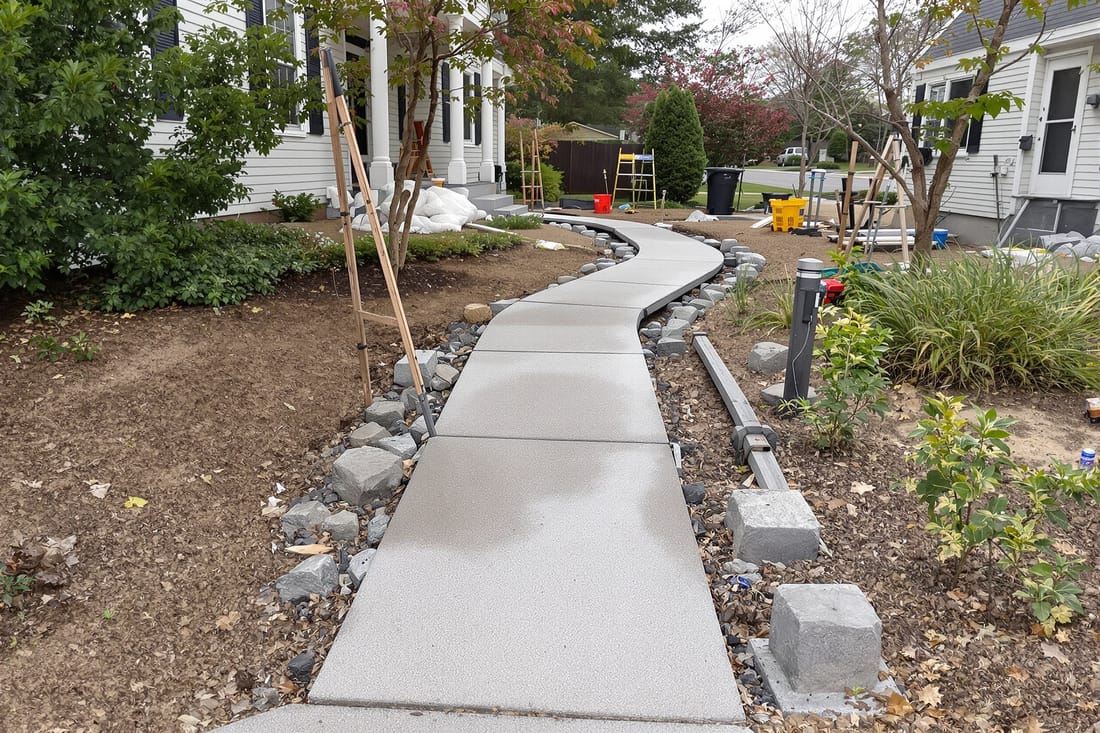
Superior Concrete Cincinnati installs and repairs concrete sidewalk and walkway systems that hold up to Cincinnati weather, heavy foot traffic, and city requirements. We work with homeowners, HOAs, small businesses, and property managers across Hamilton County to build safe, long lasting walking surfaces that look clean and professional.
Our crews understand the specific conditions in Cincinnati, from winter freeze and thaw cycles that crack poorly built concrete to tree root issues in mature neighborhoods like Hyde Park, Westwood, and Pleasant Ridge. When we design and pour a concrete sidewalk, we account for soil conditions, drainage patterns, and how the space is actually used so you get a sidewalk that performs, not just one that looks good on day one.
Whether you need a short front entry walk, a wraparound path through your yard, or a code compliant public sidewalk along the street, we size the job correctly, plan the layout carefully, and complete the work with minimal disruption to your daily routine.
How We Build a Long Lasting Concrete Sidewalk
A sidewalk is only as good as what is underneath it. Our process at Superior Concrete Cincinnati focuses on the base and drainage first, then the concrete.
1. Site evaluation and layout: We start by checking the slope of the yard, existing drainage paths, and nearby trees. We mark the proposed sidewalk with paint and strings so you can see the exact alignment and adjust before any soil is disturbed.
2. Excavation and subgrade prep: For most residential concrete sidewalks, we excavate 4 to 8 inches, depending on soil type and traffic. In areas with softer or expansive clay soils, which are common in parts of Cincinnati, we sometimes go deeper and widen the base. The subgrade is then compacted with a plate compactor so it is firm and uniform.
3. Base material: We typically install 3 to 6 inches of compacted crushed limestone or gravel under the sidewalk. This provides drainage and prevents frost heave from lifting or settling sections during Cincinnati winters.
4. Forms and reinforcement: We set straight or curved wooden forms to define the edges and confirm the slope for water runoff. For many sidewalks we use welded wire mesh or fiber reinforced concrete. On drive crossing sections, or higher load areas, we may upgrade to rebar.
5. Pouring and finishing: We pour ready mix concrete, usually 4 inches thick for standard walkways and at least 6 inches where vehicles may cross. We screed it to the correct height, then float and trowel the surface for a smooth but slip resistant finish. We also edge each slab to reduce chipping and give a crisp, finished look.
6. Control joints and curing: Joints are cut at planned intervals to control where the concrete may crack as it shrinks and expands. For sidewalks in our climate, we typically space joints every 4 to 5 feet. We then apply a curing method or curing compound that keeps moisture in the slab for the first few days, which greatly improves strength and durability.
Design Options for Concrete Sidewalks and Walkways
Concrete sidewalks do not have to look plain. Superior Concrete Cincinnati offers a range of finishes and layout options so your walkway fits your home and neighborhood.
Finish textures: For most projects we recommend a light broom finish. It creates texture that helps prevent slipping in rain or snow but still looks clean. For more decorative areas, such as backyard garden paths or patio connections, we can use exposed aggregate or stamped patterns that resemble brick, slate, or stone.
Color choices: We can add integral color to the concrete mix or apply color hardeners and stains to create contrast with the house or landscaping. Subtle earth tones are popular in many Cincinnati neighborhoods because they hide dirt and salt residue from winter deicing.
Layout and curves: Straight walks are usually best for city sidewalks that must match municipal lines, but on private property we often recommend gentle curves to soften the look and work around trees, landscaping beds, or utility features. We also adjust width based on how you use the space, such as widening near driveways or front steps so two people can comfortably walk side by side.
Edges and borders: Options include simple tooled edges, decorative saw cuts, or contrasting borders using a different finish or color. For example, a smooth troweled border around a broom finished interior can create a custom look without the cost of full stamping across the entire sidewalk.
Local Codes, Permits, and Cincinnati Specific Factors
In Cincinnati, sidewalks that connect to public right of way often must follow city standards for width, thickness, and location. Superior Concrete Cincinnati is familiar with these rules and coordinates with local guidelines when your project involves the street side of your property.
Permits and inspections: Depending on the location and scope, you may need a permit or inspection, especially if you are replacing or adding a sidewalk along a public street. We advise you on what applies to your address and can assist with the permit process or work with your chosen architect or engineer when needed.
Accessibility and slopes: For many projects, especially those near driveways or entrances, we design with ADA best practices in mind. That means managing slope, adding curb ramps where required, and minimizing trip hazards. Cincinnati’s rolling terrain can make this tricky, so we use careful layout and occasional step transitions to stay safe and practical.
Weather and freeze thaw cycles: Our area sees repeated freeze and thaw throughout winter. Poorly drained or improperly sloped sidewalks trap water that then expands as it freezes, leading to cracks and surface spalling. We include appropriate pitch away from structures, drainage considerations, and air entrained concrete mixes suitable for our climate to handle these seasonal changes.
What Affects Concrete Sidewalk Cost in Cincinnati
We provide clear, itemized estimates so you know what you are paying for. Several real world factors drive the cost of a concrete sidewalk in the Cincinnati area.
Length, width, and thickness: More square footage means more concrete, base material, and labor. A standard 4 foot wide, 4 inch thick walkway will cost less per linear foot than an extra wide or heavy duty walk. Areas that must be 6 inches thick, such as where vehicles cross, add concrete and reinforcement cost.
Site access and demolition: Easy access yards with open driveways are faster and less expensive to work in than tight urban lots or fenced backyards with limited entry. If we must remove old concrete, brick, or deteriorated asphalt, that demolition and disposal time is part of the budget.
Soil and base requirements: Soft or unstable soils, high moisture areas, or locations with existing drainage problems may require deeper excavation, more aggregate base, or added drainage solutions. This adds upfront cost but prevents much larger repair costs later.
Finish and decorative choices: A standard broom finish in natural gray is the most economical. Stamped patterns, exposed aggregate, or colored concrete require more materials, labor, and sometimes specialized sealers, which increases the total investment.
Season and scheduling: In busy construction seasons, especially late spring and early fall when weather is ideal, availability can affect timing. We plan pours around temperature and rain forecasts to avoid issues with curing or surface quality, particularly important in Cincinnati’s variable weather.
Common Sidewalk Problems We Solve and How We Prevent Them
Many of our sidewalk projects in Cincinnati involve correcting issues caused by past shortcuts. Understanding these problems helps you see why proper installation matters.
Cracking and heaving: Random cracking often comes from a weak base, missing control joints, or mixes that were not suitable for freeze thaw cycles. Heaving occurs when water under the slab freezes and lifts it. We reduce these risks by using compacted granular base, correct joint spacing, and air entrained concrete mixes rated for our climate.
Uneven slabs and trip hazards: Sidewalk panels can settle at different rates or be pushed up by tree roots, creating dangerous lips between sections. When replacing or repairing, we address the cause, which may mean root pruning or adjustments to grade, not just pouring new concrete over the problem.
Surface scaling and spalling: In our area, deicing salts, especially when applied heavily, can damage poorly cured or low quality concrete. We focus on proper curing, suitable strength, and optional sealing to resist salt and moisture penetration. We also provide guidance on when and how to use deicers safely on new concrete.
Standing water: A flat or poorly sloped sidewalk can hold puddles that lead to algae growth, icy patches, and accelerated surface wear. During layout, we set the forms with a consistent pitch so water drains off the walkway instead of sitting in low spots.
Our Process from Estimate to Finished Walkway
Working with Superior Concrete Cincinnati on a new concrete sidewalk is straightforward and organized, so you always know what is happening next.
1. Site visit and consultation: We visit your property, listen to how you plan to use the walkways, measure the area, and discuss design options and any city or HOA requirements. This is also when we look for drainage concerns, utilities, and obstacles.
2. Written proposal: You receive a clear proposal that outlines scope of work, thickness, reinforcement, finish type, and any decorative features, along with schedule expectations. If permits are needed, we outline who will handle them.
3. Scheduling and preparation: Once approved, we schedule the work, coordinate material deliveries, and notify you of what to move or protect near the work zone. We also call in utility locates when digging is close to service lines.
4. Construction: Our crew arrives on time, completes demolition and excavation, builds forms, installs base and reinforcement, and pours and finishes the concrete. We maintain a clean, contained work area and keep you updated throughout the process.
5. Curing and cleanup: After the pour, we protect the new sidewalk from foot traffic, pets, and rain during critical curing hours. We remove forms, backfill edges as agreed, and haul away debris so your property is tidy.
6. Final walkthrough and care tips: We walk the project with you, confirm details, and explain when you can safely walk on the new sidewalk and, where applicable, drive across it. We also provide guidance on sealing, snow removal, and long term care so your concrete sidewalk stays in top shape for many years.