Home › Industrial Floors and Specialty Slabs
Reliable, professional industrial concrete floor in Cincinnati, OH from Superior Concrete Cincinnati. Contact us today for a free on-site estimate.
Superior Concrete Cincinnati provides professional industrial concrete floor throughout Cincinnati, OH, Ohio and the surrounding area. Our licensed, insured crew delivers safe, clean, on-time work with a free estimate before anything begins. Call (513) 993-5657 or request your free quote.
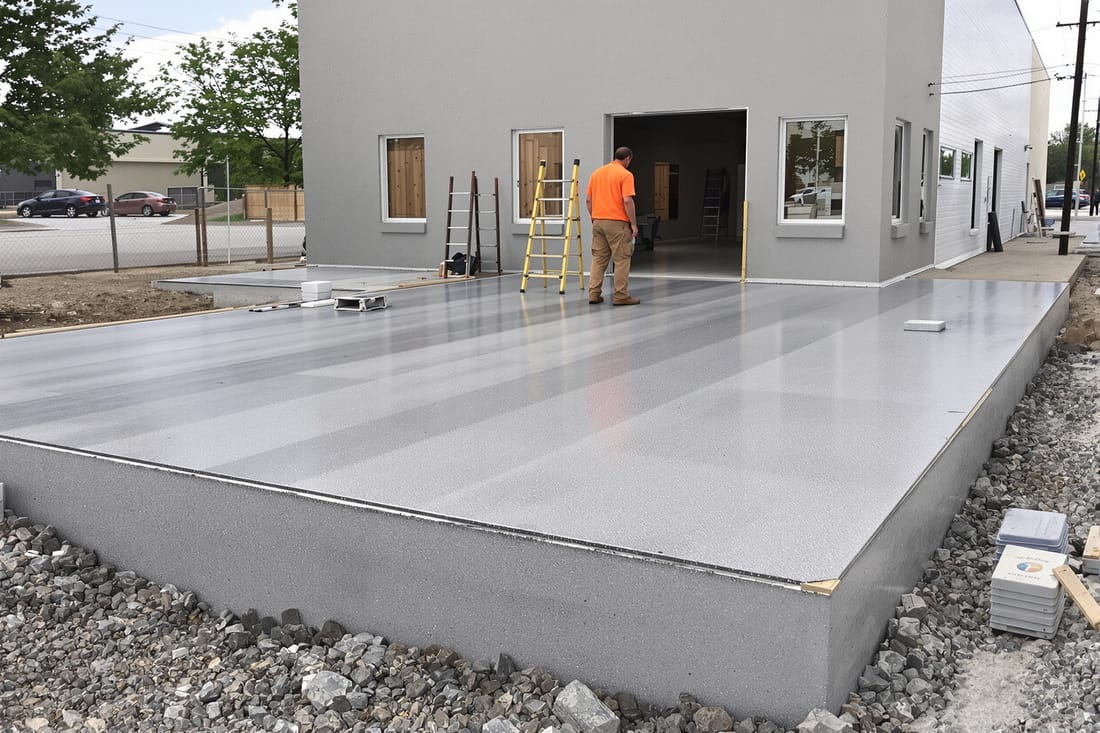
Industrial concrete floors that match your operation, not a catalog
An industrial concrete floor in Cincinnati has to do more than look flat and gray. It has to stand up to forklift traffic, hard-wheeled carts, chemical drips, thermal swings, and repeated loading, all while staying level enough for racking and machinery. At Superior Concrete Cincinnati, we start every industrial floors and specialty slabs project by walking your space, looking at how you use it day to day, and asking specific questions about your equipment and traffic patterns.
We want to know axle loads on your forklifts, whether you use narrow aisle lifts, if you have point loads under racking, and what kind of wheels your equipment runs on. A facility with pallet jacks and light manufacturing needs a very different floor than a distribution center with high-bay racking or a machine shop with coolant on the ground. We also factor in your future plans, like adding heavier equipment or changing the layout, so your slab design does not box you in later.
Because we live and work in the Cincinnati area, we know how local freeze-thaw cycles, ground moisture, and river valley soils affect slabs over time. Floors that might be acceptable in a dry, warm climate often crack or curl here if they are not designed correctly. We use that local experience to recommend thickness, reinforcement, and joints that hold up in real Cincinnati conditions, not just in a design handbook.
How we design and build industrial slabs that stay flat
A durable industrial concrete floor starts long before the truck shows up with concrete. First, Superior Concrete Cincinnati evaluates subgrade conditions. We check soil type, compaction, and drainage. On some Cincinnati sites, especially near the river or in older industrial areas, we see soft or fill soils that need proof-rolling and sometimes undercutting. We bring in a compacted granular base, often 4 to 8 inches of crushed stone, to create uniform support under the slab.
Next, we work on slab design. Typical industrial slabs in our area range from 5 to 8 inches thick, with heavier duty or specialty slabs going thicker. We discuss whether a traditional rebar grid, welded wire mesh, or a fiber-reinforced mix makes the most sense for your loads and budget. For heavy rack legs or machinery bases, we design thickened slab sections or isolated pads so loads are transferred properly into the ground.
Joint layout is one of the most important details. Expansion and control joints let your industrial concrete floor move as temperatures and moisture change, without uncontrolled cracking. We plan sawcut joints based on your column grid, rack layout, and main forklift routes so joints do not land where your wheels turn sharply or where small-diameter casters might chip edges. We also offer dowel systems that help keep adjacent slabs level, which is critical for smooth forklift travel.
On pour day, our crew sets accurate forms and checks elevations with laser levels, then places and consolidates the concrete so there are no weak spots or honeycombing. We use specialized equipment, such as laser screeds when needed, to get flatness and levelness that meets the needs of modern racking and automation. For many facilities, we target higher flatness (FF) and levelness (FL) numbers than a basic warehouse slab so your equipment runs smoothly and safely.
Specialty slab options for heavy, wet, or sensitive environments
Not every industrial floor can be a standard slab. Superior Concrete Cincinnati installs specialty slabs tailored to specific industries in and around Cincinnati, from food processing and automotive to fabrication shops and cold storage.
For floors exposed to oils, coolants, or frequent wash-downs, we often recommend a denser concrete mix, careful finishing, and sometimes a surface hardener to reduce absorption. Where chemicals are a concern, we coordinate with coating installers so the slab surface profile, curing method, and moisture conditions are right for epoxies or urethane systems. Getting this wrong can lead to peeling coatings within a year, so we plan the sequence and materials with the end finish in mind.
In heavy manufacturing or areas with impact loading, we design thicker, heavily reinforced slabs and may add steel fibers or macro-synthetic fibers to control cracking. For machine foundations or vibration-sensitive equipment, we create isolated or inertia pads that are separated from the surrounding slab so vibration does not transfer through the building. These are custom engineered, with specific thickness, reinforcement cages, and anchor bolt layouts.
We also handle specialty slabs like freezer or cooler floors, where Cincinnati’s humid summers and cold winters can cause condensation and frost heave if the slab and insulation are not detailed correctly. In those cases, we coordinate insulation, vapor barriers, and sometimes under-slab heating systems so the floor stays stable and flat. Tilted slabs for drainage, trench drain integrations, and load transfer at dock doors are all part of the specialty work we provide.
Finishes, durability upgrades, and maintenance planning
After the slab is placed and finished, you still have choices that affect long-term performance. Superior Concrete Cincinnati can provide a standard troweled finish for general warehousing, or a harder, denser surface for high traffic forklift aisles. For many industrial projects, we recommend one of two directions: a hard-troweled slab ready for a future coating, or a hardened and densified surface that can perform as the finished floor.
Dry shake hardeners and liquid densifiers can significantly improve abrasion resistance and reduce dusting on industrial concrete floors. In Cincinnati’s mixed climate, where doors are often open and moisture enters, these treatments also help the floor resist surface wear from fines and dirt grinding under wheels. We discuss slip resistance needs and whether you expect oils, water, or powders on the floor, then match the finish texture accordingly.
Proper curing is often skipped to save time, but it is one of the biggest factors in slab life. We plan curing methods around your schedule and any upcoming coatings. That might mean a curing compound that is compatible with your future epoxy, or wet curing where we need maximum strength and minimal curling. We explain what equipment can and cannot run on the floor during the curing period, so you do not accidentally damage a brand-new slab.
We also walk you through a basic maintenance plan: how to clean the floor without harming any treatments or coatings, what kind of joint filler to use and when, and early signs of issues like curling, joint spalling, or moisture problems. A short conversation at the end of the project often adds years to the life of your industrial concrete floor and keeps repair costs predictable.
What drives cost and how Superior Concrete Cincinnati keeps it predictable
Industrial floors and specialty slabs are investments, and understanding what drives cost helps you plan better. The main cost factors are slab thickness, reinforcement type and density, concrete mix design, site conditions, and the level of flatness or special detailing you require. For example, a 6 inch slab with basic reinforcement in an easily accessible Cincinnati warehouse will cost less per square foot than a 10 inch, heavily reinforced specialty slab with isolated machine pads and trench drains.
Subgrade issues are another big driver. If we find soft or poorly compacted soils, especially common in older industrial areas and near the river, we may need undercuts, additional stone, or geogrid. We are straightforward about these findings and provide options, like staged improvements, so you can balance budget and performance rather than getting surprise change orders later.
Existing buildings can have access limitations, low doors, or tight interior columns that affect how we bring in equipment and place concrete. We plan logistics ahead of time, including pour sizes, pump truck needs, and where concrete trucks can stage, so your operations are disrupted as little as possible. For active facilities, we often phase the work so you can keep critical areas running while we upgrade sections of your floor.
Superior Concrete Cincinnati focuses on detailed pre-planning and clear communication. Before we pour anything, you know the slab design, reinforcement layout, joint plan, and schedule. We coordinate with your other trades, such as rack installers, electricians, and coating contractors, so floor penetrations, conduit, and drains end up in the right place and do not require expensive cutting later. Our goal is a smooth project that leaves you with an industrial concrete floor that matches your operational needs, local Cincinnati conditions, and long-term budget.